



Case Study: Supporting Practical Engineering Skills Development at Boston College
Partnership Overview
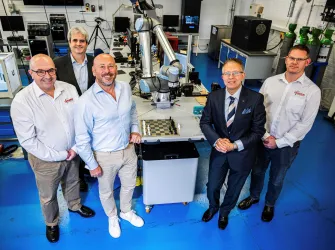
A collaboration between Colchester Machine Tool Solutions (CMTS) and West Yorkshire Manufacturing Services (WYMS) to develop modular engineering training for businesses, has led to the development and delivery of a program of training to engineering teaching staff at Boston College. The initiative forms part of WYMS’s wider mission to support skills development, workforce capability, and industry-aligned training across the region.
The programme focused on strengthening practical machining capability among teaching staff, ensuring colleges are better equipped to deliver high-quality, industry-relevant engineering education.
Context and Rationale
Boston College, home to the state-of-the-art Institute of Technology and the Engineering, Manufacturing, and Technology (EMAT) Centre, identified a need to upskill academic engineering staff in practical machining, particularly in the use of manual and CNC lathes and milling machines. While staff held strong theoretical knowledge, only a limited number were confident in its application within practical machine operation, creating challenges around workshop cover, curriculum flexibility, and consistent student support.
Through its engagement, the college was able to access targeted, employer-informed training designed to address these gaps and improve resilience within practical teaching delivery.
Training Delivered
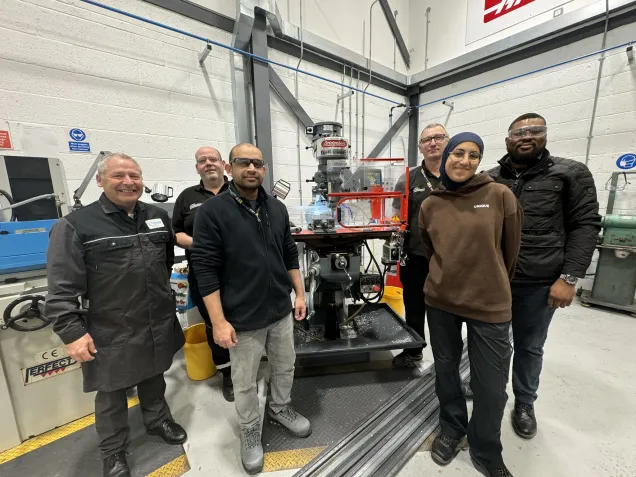
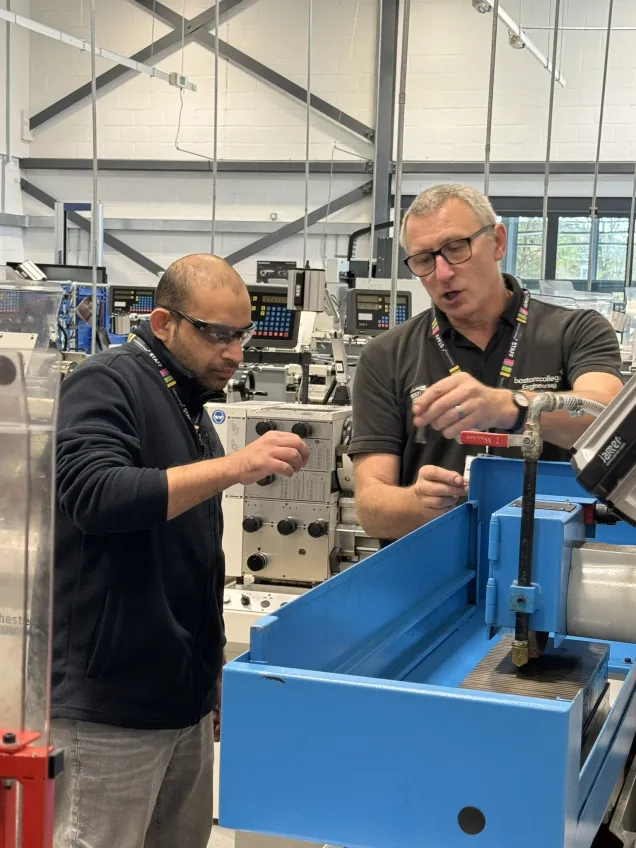
The training focused on essential manual and CNC machining competencies, covering: machine setup, tooling selection, precision measurement, and safe working practices within a machining environment. Whilst some participants already had knowledge of CNC programming, the training provided the opportunity for practical application of their knowledge providing industry applied tips and techniques to pass on to their students.
Delivery Approach
The practical, workshop-based approach, ensured that theoretical principles were explained in context, and reinforced through live demonstrations and supervised machine use. Providing immediate relevance to teaching practice. The approach enabled staff to develop both technical competence and confidence in explaining machining processes to students.
Health and safety, as always, remained a core focus throughout, ensuring staff were fully aware of correct procedures prior to operating equipment.
Impact and Outcomes
The training has delivered clear benefits for Boston College and its learners. Teaching staff reported increased confidence and competence in operating manual lathes and milling machines, allowing a wider group of lecturers to support and deliver practical sessions.
As a result, students now benefit from more consistent workshop support, clearer demonstrations, and stronger links between theory and practical application, with less practical time lost during periods of tutor absence and curriculum changes.
Early feedback indicates improved student engagement, confidence, and participation during practical engineering lessons, one participant, engineering lecturer Kingsley Agouru, shared:
“Students are far more confident and engaged during practical sessions now that we can demonstrate techniques properly and relate them to real examples.”
Feedback and Learning Points
Feedback from participating staff was highly positive, with particular praise for the trainer’s industry knowledge, clear explanations, and supportive delivery. Participants valued the hands-on nature of the programme and its direct relevance to their teaching roles.
Key learning points included the value of prioritising essential skills modules, integrating explanation alongside practical activity, and allowing additional time for troubleshooting in future programmes.
WYMS Value and Wider Relevance
WYMS works throughout the region to strengthen the pipeline of future engineers and ensures learners receive industry-relevant, high-quality practical education; by supporting collaboration between training providers, industry specialists, and education institutions, we are able to identify opportunities and directly address skills gaps.
The Boston College programme provides a strong example of how targeted, employer-informed training can deliver measurable benefits for staff capability, enhance the student experience, and support regional skills development for employers.