

How to Get the Most Out of Your Energy: Practical Advice for Manufacturers
Energy remains an important consideration for manufacturers, whether the priority is reducing operating costs, improving efficiency, understanding what support is available or making better-informed decisions about future investment.
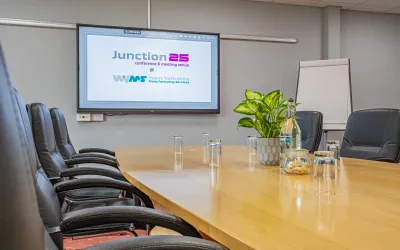
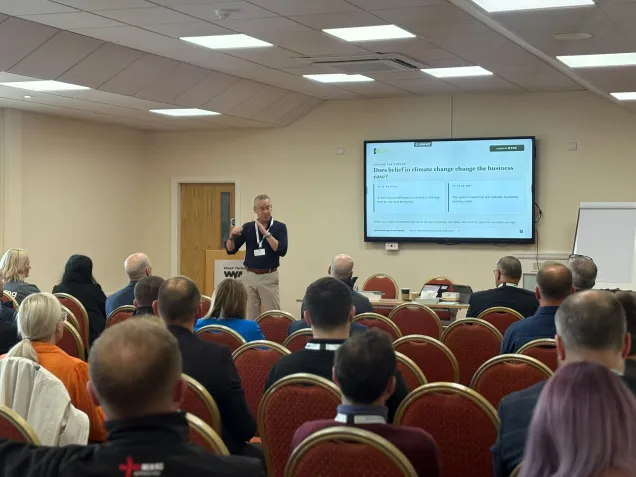
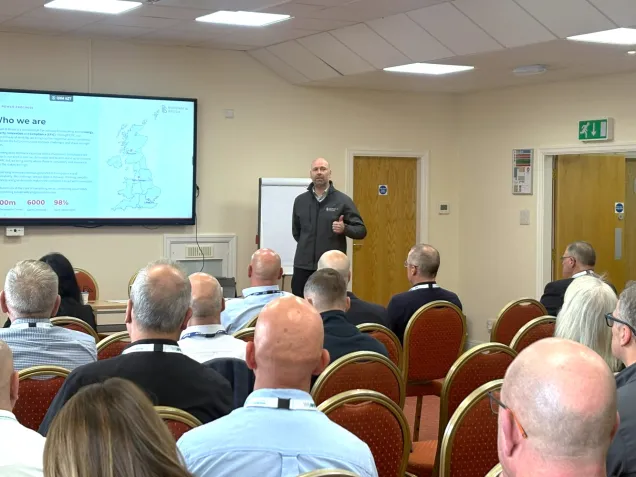
On 22 October, West Yorkshire Manufacturing Services brought manufacturers together for our quarterly networking event – Autumn’s topic was: How to Get the Most Out of Your Energy, with Andrew Hawley of Hawley Energy and Jonathan Menzies of Bonham & Brook sharing their expertise on two sides of the energy challenge: using energy more effectively and understanding the financial reliefs that may be available to manufacturers.
For those who attended, and manufacturers who were unable to join us, we've brought together some of the key information, practical tools and further support available.
Start with what your site is actually doing
Andrew Hawley, Hawley Energy
One of the central messages from Andrew Hawley’s session was simple: start with the evidence.
Manufacturers cannot control every factor affecting the price of energy, but they can look closely at how much energy they need to buy, how effectively they use it, and how and when it is procured.
That starts with understanding your own site.
Half-hourly energy data can help businesses understand what is consuming energy and when, including periods where production has stopped. Comparing consumption with production output can also provide a useful baseline against which future improvements can be considered.
Put your energy data to work
Understanding when and where energy is being used gives manufacturers a stronger basis for deciding what to tackle first.
Rather than beginning with a particular technology or solution, the focus should be on establishing what is actually happening across the site and identifying where there may be opportunities to improve.
Manufacturers looking to investigate this further can use Hawley Energy's practical resources, which include tools relating to half-hourly energy data and bill checking.
Look at heat, solar and battery opportunities in context
Technologies such as heat pumps, solar and battery storage can all form part of a manufacturer's energy strategy, but Andrew Hawley stressed the importance of considering them against the requirements and operating patterns of the individual site.
For heat, that can mean understanding where heat is currently generated, where it is required, at what temperature and at what time.
Solar should similarly be considered alongside how much electricity a site actually uses and when it uses it, rather than simply how much generation can be installed. Battery storage also needs to be considered against factors such as the site's load profile, tariffs and constraints.
Hawley Energy's dedicated manufacturer resources provide further materials for businesses beginning to investigate these areas.
Don't overlook your electricity connection
Manufacturers considering changes to electricity use or onsite generation should also understand their existing connection agreement.
This determines what a site can physically import and export and can therefore influence what can be achieved through technologies such as solar.
Andrew also highlighted other areas manufacturers may want to investigate, including compressed-air leaks, power factor and peaks, as well as circumstances where voltage optimisation could be worth considering.
Move from opportunities to action
Identifying potential improvements is only part of the process. Manufacturers also need to establish which projects are worth pursuing and build the evidence needed to make an informed investment decision.
Potential measures can be considered according to their impact, effort and the quality of evidence supporting them, followed by an investment case considering costs, expected benefits and the assumptions behind both. Performance can then be measured after implementation against the expected savings.
A useful starting point for manufacturers is therefore to:
- Gather your recent bills and energy data.
- Look at what happens outside normal operating or production periods.
- Identify potential opportunities.
- Prioritise where action could have the greatest value.
- Measure what happens following any changes.
The overall approach is to understand and improve energy efficiency before deciding where further investment may be appropriate.
Continue exploring: Energy Decisions for Manufacturers
For manufacturers who want to explore these areas further, Hawley Energy has created a dedicated Energy Decisions for Manufacturers resource.
It provides a useful next step from Andrew Hawley’s presentation, allowing businesses to explore the subjects most relevant to their own site and access practical supporting resources.
Explore Energy Decisions for Manufacturers | Hawley Energy
Could your business be missing out on energy tax relief?
Jonathan Menzies, Bonham & Brook
Reducing energy consumption is one side of the equation. Jonathan Menzies from Bonham & Brook looked at another: whether manufacturers are paying energy-related costs from which they could potentially qualify for relief.
His presentation introduced four areas manufacturers may want to investigate.
1. EII Exemption and Network Charging Compensation
For qualifying energy-intensive industries, the EII Exemption combined with Network Charging Compensation can provide relief against electricity costs.
Eligibility involves both the sector in which a business manufactures and an assessment of electricity costs against the business's Gross Value Added.
2. UK ETS/CPS Compensation
This scheme is designed to compensate qualifying energy-intensive businesses for electricity costs associated with the UK Emissions Trading Scheme and carbon pricing. Eligibility includes particular industries and an energy-intensity assessment.
3. Climate Change Levy exemption
The Climate Change Levy, or CCL, is a tax on business energy use. Businesses carrying out certain mineralogical or metallurgical processes can be exempt from the main CCL rates for energy used in those processes.
Jonathan Menzies’ presentation also highlighted the potential to reclaim qualifying CCL previously paid.
4. British Industrial Competitiveness Scheme
BICS was given particular attention during the session because its first application window opened on 1 October 2026 and closes on 30 November 2026.
For eligible manufacturers, BICS provides exemption from three policy costs on electricity bills: the Renewables Obligation, Feed-in Tariffs and Capacity Market. It is not a complete electricity-bill rebate, and businesses need to meet the scheme's eligibility requirements.
For manufacturers unsure whether any of these schemes might apply, the key message is don't simply assume that they do or don't. Review your position and seek appropriate specialist advice about eligibility.
For enquiries relating to the information presented, Jonathan Menzies can be contacted at jmenzies@bonhamandbrook.co.uk or +44 (0)7723 918941.
Further sustainability and energy support for West Yorkshire businesses
Following the event, Jim Porter, Senior Business Sustainability Manager at the West Yorkshire Combined Authority, shared details with WYMS of additional free support available to businesses.
This includes a combination of group and one-to-one support.
Opportunities to learn and plan
Support available includes:
- webinars covering subjects including reducing energy costs, waste reduction and the circular economy, and staff engagement and behaviour change;
- business-led peer-to-peer workshops; and
- Carbon Reduction Planning Workshops, based on small99's Carbon Reduction Fundamentals Action Box toolkit, designed to help businesses generate a simple Carbon Reduction Plan.
One-to-one support for SMEs
Eligible SMEs can also access voucher support providing 50% funding up to a maximum of £5,000 towards a £10,000 project.
This can support consultancy work to calculate a business's carbon footprint and develop a Carbon Reduction Plan, as well as research into specific energy-efficiency projects.
Resource Efficiency Audits are also available, looking at energy, waste and water use and identifying potential low or no-cost measures and investment opportunities.
Alongside the SME eligibility criteria, businesses receiving this support should be categorised as higher-energy users, defined as having more than 175,000 kWh of total energy use.
Explore West Yorkshire Combined Authority sustainability support
Exploring new approaches to energy purchasing
The Combined Authority is also exploring options intended to help energy-intensive SMEs access more affordable and sustainable energy, including Corporate Power Purchase Agreements, private energy markets and other approaches to energy procurement.
A business workshop is planned for early December 2026 to understand current energy-purchasing challenges and explore interest in alternative procurement models.
Businesses using 500,000 kWh of electricity per year are invited to register their interest in participating by contacting adam.mann@westyorks-ca.gov.uk.
What should manufacturers do next?
There isn't one energy solution that will be right for every manufacturer.
One of the clearest messages to take away is the value of understanding your own position before deciding where to act.
That could mean looking more closely at when and where energy is being consumed, investigating efficiency opportunities before making a larger investment, or checking whether your business qualifies for financial relief or support that you are not currently accessing.
A useful starting point is to:
- Understand your energy use. Establish where and when energy is being consumed.
- Identify opportunities. Look for areas where avoidable consumption or inefficiencies could potentially be addressed.
- Investigate potential investments. Consider technologies against the actual requirements and evidence from your site.
- Explore available reliefs. Check whether any of the energy tax reliefs highlighted by Bonham & Brook could apply to your business.
- Understand what support is available. West Yorkshire businesses can explore the sustainability support currently available through the Combined Authority.
- Use the practical resources available. Hawley Energy's dedicated Energy Decisions for Manufacturers resource provides a next step for manufacturers wanting to explore the subjects covered by Andrew Hawley in more detail.
Small improvements, backed by good information, can provide a practical starting point for making better energy decisions.